

Child Care Subsidy


A child's mind is nature's greatest classroom

A calm, prepared environment where children grow in confidence, capability and curiosity — guided by Montessori principles and recognised early learning frameworks.


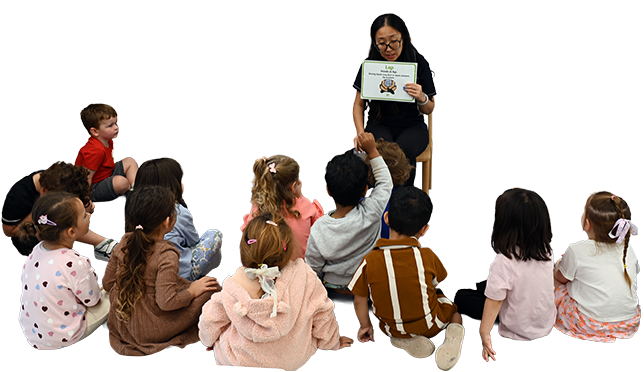
Teacher and Student
What is Montessori?

Child-centred learning for lifelong thinkers

Montessori education is a thoughtful, child-centred approach developed by Dr Maria Montessori. It is based on the belief that children are naturally curious, capable and motivated to learn when given the right environment, guidance and freedom within clear boundaries.

At Montessori Minds, Montessori principles are brought to life through carefully prepared environments and meaningful learning experiences that foster independence, concentration, confidence and respect.

Our educational program is aligned with the VEYLDF and EYLF, and our Montessori approach is integrated within a broader program that also supports the delivery of our kindergarten learning outcomes. This allows children to benefit from the richness of Montessori education while engaging in a program that reflects recognised early childhood frameworks in Victoria and Australia.


VEYLDF Aligned

Victorian Early Years Learning & Development Framework
EYLF Aligned

Early Years Learning Framework for Australia
Kindergarten Program

Victoria kindergarten learning outcomes integrated

The Prepared Environment

A classroom designed for discovery


In a Montessori classroom, every element is intentional. The environment is thoughtfully designed to foster independence, curiosity, and exploration. Children choose their own activities within a structured framework, with teachers acting as guides who support appropriate learning choices.

Classrooms are arranged into child-sized workstations that span five key learning areas:
Practical Life Skills
Self-care, independence & daily living
Sensorial Exploration
Refining the five senses through materials
Language Development
Oral expression, reading & writing
Mathematics
Concrete to abstract number concepts
Cultural Studies
Geography, history, science & the arts

Children use specially designed Montessori materials that promote hands-on learning, self-correction, problem-solving, and deeper engagement with concepts. Each material contains its own control of error — meaning children can discover their mistakes independently, building confidence and resilience.
Creativity

Open-ended exploration sparks original thinking
Independence

Children trust themselves to lead their learning
Social Skills

Mixed-age groups nurture empathy and collaboration
Concentration

Deep focus develops through meaningful work
Self-Discipline

Inner order grows through freedom with responsibility
The Foundation of Montessori

Dr. Montessori's Human Tendencies

Dr. Montessori believed every human being is born with universal tendencies that drive learning and development. By honouring these natural inclinations, we create environments where children truly thrive.

Self-Preservation
A natural instinct to look after oneself. Children flourish when given freedom to work with gentle supervision, fulfilling their own needs with growing confidence.
Orientation
A sense of belonging. Children develop the skills to adapt to new learning environments, building the security needed to explore with confidence.
Exploration
Exploration drives both physical and cognitive development — encouraging children to interact with their environment and discover how the world operates.
Order
Children have an innate sense of order. They make synaptic connections in their brain when doing things their own way, creating internal structure and logic.
Abstraction
Young children develop abstract thinking through pretend play. In Kindergarten years, this capacity for abstraction deepens significantly through symbolic reasoning.
Imagination
Individual responses to materials and experiences inspire creativity. Children imaginatively use simple objects to represent something greater, exploring symbolic roles.
Communication
Communication encompasses more than words — children express through bodies, drawings, and expressions. Teachers play a pivotal role in fostering these skills.
Activity
Play is work in Montessori. By interacting with materials in a prepared environment, children work purposefully and self-construct their own understanding.
Repetition
Children revisit activities because repetition provides the practice needed to master new skills — improving speed, building confidence, and strengthening neural connections.
Concentration
Learning to concentrate helps children learn faster, finish tasks, reduce impulsive behaviour, and develop the calm focus that underpins all meaningful work.
Precision
Children strive for precision to achieve consistent outcomes. This engagement in careful, exact work creates deep learning connections and intrinsic motivation.
Self-Perfection
Montessori materials are self-correcting, giving every child the opportunity to identify and correct their own mistakes — cultivating resilience and a growth mindset.
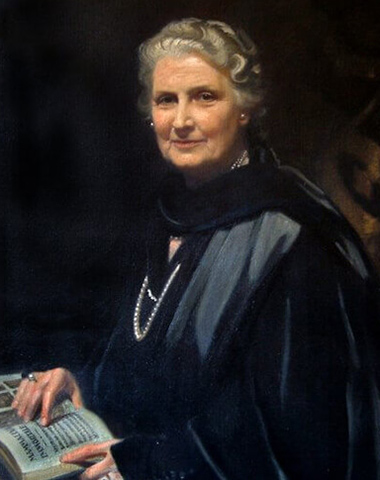
Dr Maria Montessori
The Founder

Dr. Maria Montessori


The child has a mind able to absorb knowledge. He has the power to teach himself.
Dr Maria Montessori

Born in 1870 in Italy, Dr. Maria Montessori became one of the first women to graduate from the University of Rome's medical school. Through her work with children in Rome's impoverished districts, she developed an entirely new approach to education rooted in scientific observation.

Her revolutionary approach places the child at the centre of the learning process, focusing on respect for the child's individuality and encouraging lifelong learning through exploration and discovery. By observing how children naturally learn — with joy, curiosity, and purpose — she built a method that has now inspired millions of classrooms worldwide.

Today, Montessori's insights are validated by decades of neuroscience and developmental research, confirming what she observed over a century ago: that children, when trusted and given the right environment, are extraordinary learners.